News
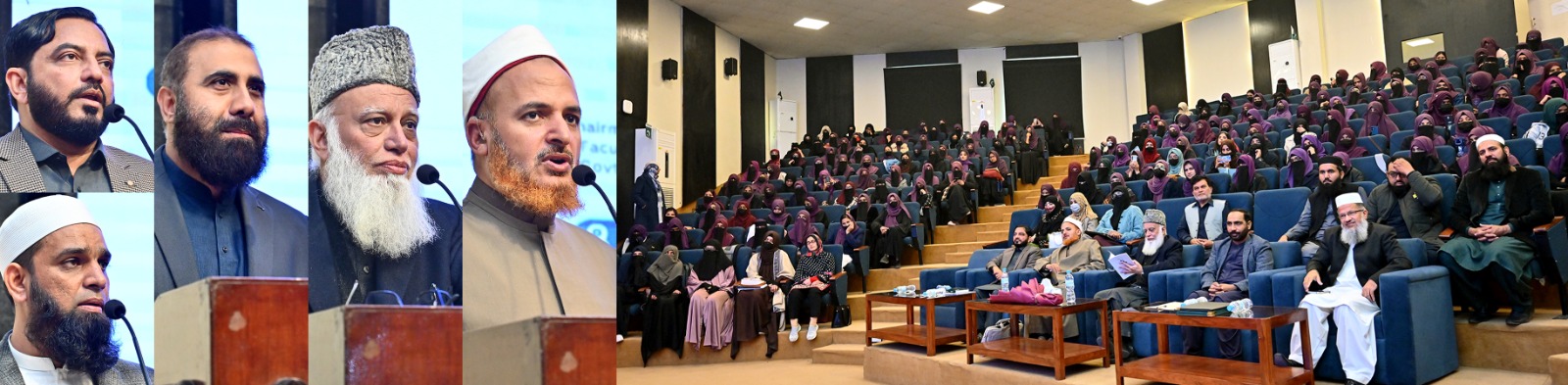
The Department of Islamic Studies at the University of Sargodha organized an international seminar titled “The Tradition of Tafsir and Qur’anic Sciences in Pakistan and Egypt: Scholarly, Intellectual and Historical Perspectives,” bringing together leading scholars of Qur’anic studies from both countries.
The event provided a comprehensive academic forum highlighting classical and contemporary approaches to Qur’anic interpretation.
Chairman of the Department, Prof. Dr. Muhammad Ferozuddin Shah, formally opened the seminar and welcomed the distinguished guests. He explained the objectives, academic significance and contemporary relevance of Qur’anic studies, noting that the discipline goes beyond traditional pedagogy and offers meaningful insight into modern intellectual, social and cultural questions.
He emphasized that comparative study between Pakistan and Egypt could pave new avenues of scholarly collaboration and intellectual development across the Muslim world.
From Egypt’s Al-Azhar University, Dr. Sheikh Ahmed Muhammad Salim Al-Sharqawi presented an overview of Egypt’s rich Tafsir tradition, detailing the historical scholarly tradition of Al-Azhar, methodological approaches of prominent exegetes, institutional contributions and emerging trends in modern Qur’anic understanding.
Dr. Saad Siddiqui of the University of the Punjab highlighted the intellectual strength of the Subcontinent’s Tafsir legacy, discussing classical texts, methodological depth and the region’s contribution to comparative Qur’anic studies.
Meanwhile, GC University Faisalabad’s Dr. Yasir Arafat outlined the historical evolution of Qur’anic sciences in Pakistan and the broader Subcontinent, emphasizing its scholarly rigor, diversity and balanced interpretive tradition.
At the closing session, Dean Faculty of IT and Computing Prof. Dr. Muhammad Ilyas presented honorary certificates to all speakers. He also praised the seminar’s scholarly depth and noted that such academic exchanges strengthen cross-regional research collaborations in Qur’anic studies.